Key Takeaways
- Implementing a Holistic Progress Card works best through a phased 90-day rollout—starting with preparation, testing a pilot, and expanding school-wide—so teachers are not overwhelmed by end-of-term paperwork.
- Hands-on training and stage-specific frameworks are crucial because teachers need practice recording clear, evidence-based observations across cognitive, social-emotional, and physical growth.
- You should always establish a clear assessment process and communicate openly with parents before choosing software, making sure the technology simplifies the workflow rather than dictating it.
HPC implementation gives school leaders a structured way to assess student development beyond examination marks. For principals in India, the process involves preparing teachers, selecting suitable assessment methods, organising student records, and setting up a reporting system that fits the school's academic calendar.
The National Education Policy (NEP) 2020 recommends a redesigned student progress card that captures learning across cognitive, social-emotional, and physical development. For schools preparing to adopt HPC, teacher training is a key part of implementation, and TalentGro Global provides HPC implementation training through NCERT-PARAKH Master Certified Trainers to help school teams prepare for classroom assessment and reporting.
A 90-day plan gives principals a practical schedule for preparation, a small pilot, and wider adoption. With the right staff preparation and regular reviews, schools can establish an HPC process that works within their existing academic routines.
What Does HPC Implementation Mean?
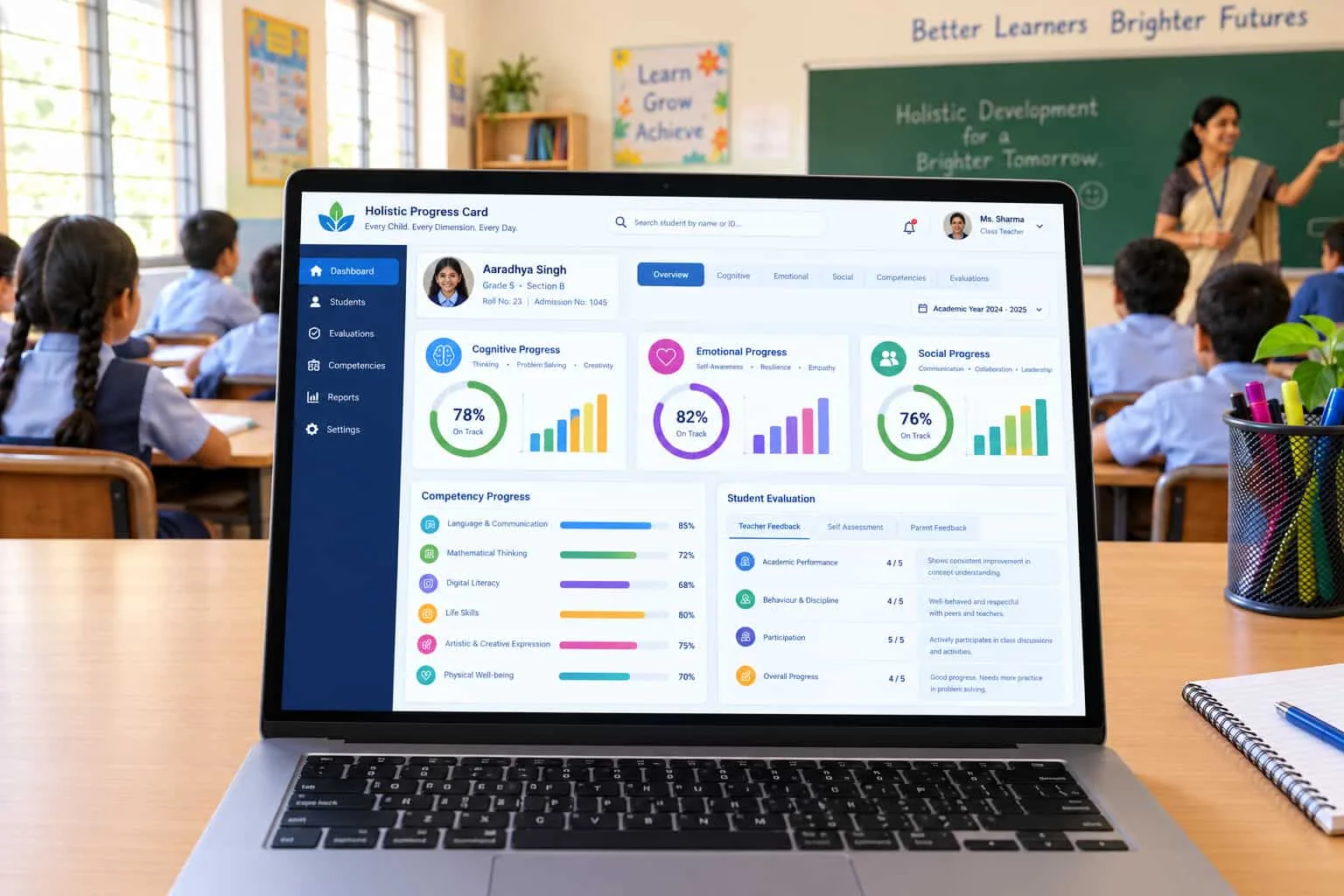
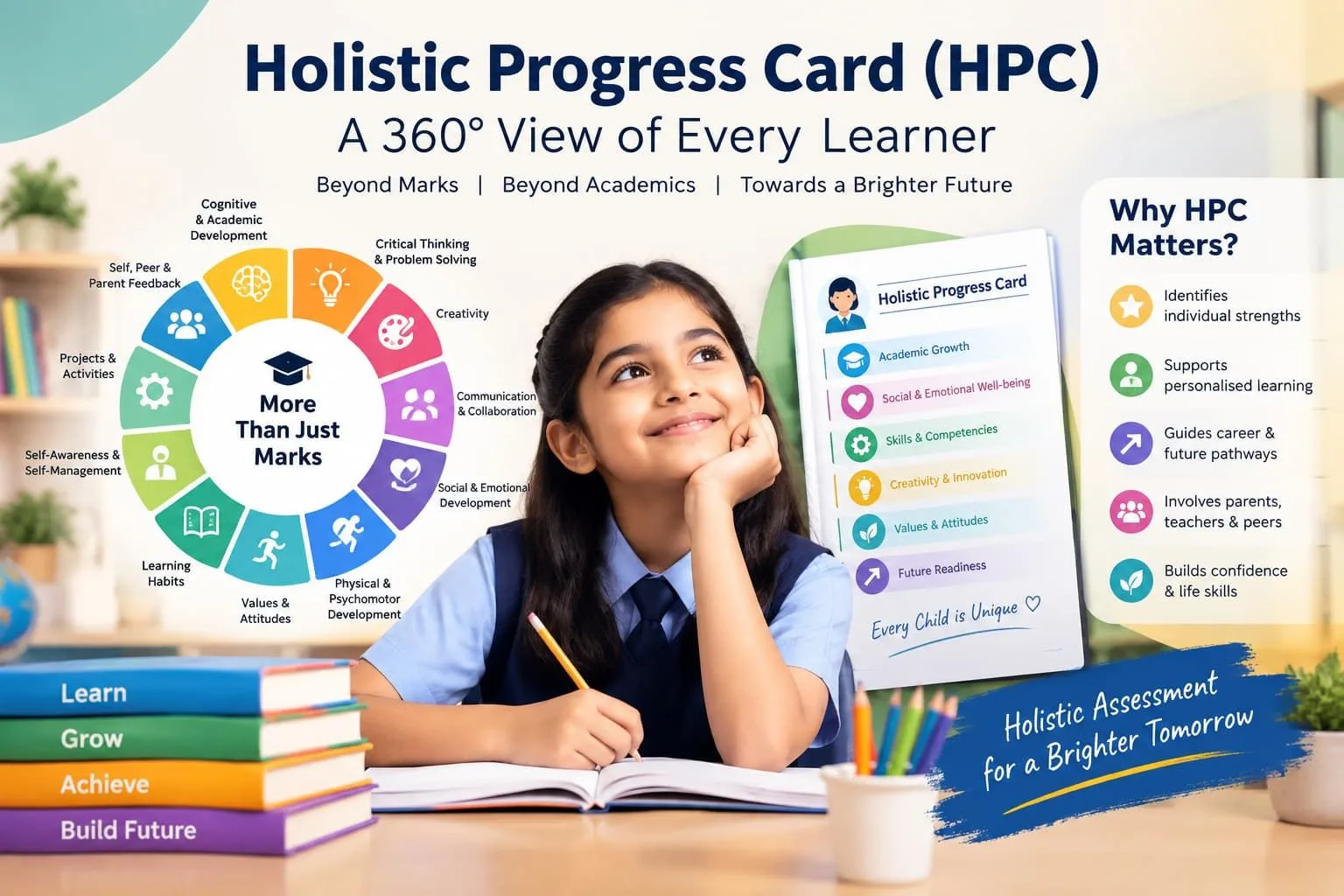
HPC implementation means introducing a structured method for recording, reviewing, and communicating student progress across relevant learning competencies. It combines classroom evidence, teacher observations, student reflection, and feedback to give teachers and parents a broader view of each learner's development.
A conventional report card often focuses on subject marks and grades. An HPC framework adds information about how students apply knowledge, participate in activities, work with peers, express ideas, and develop age-appropriate skills.
PARAKH provides separate frameworks for four stages of school education:
- Foundational stage: Bal Vatika through Grade 2.
- Preparatory stage: Grades 3–5.
- Middle stage: Grades 6–8.
- Secondary stage: Grades 9–12.
Each stage has different assessment needs, so principals should select the applicable framework rather than use one identical format for every class.
For school leaders, the goal is to make assessment part of regular classroom practice instead of treating HPC as an extra form to complete at the end of a term. Teachers need to understand how to record evidence, assess competencies, and communicate student progress in clear language.

Why Do Schools Need a 90-Day HPC Plan?
A 90-day HPC rollout plan gives principals time to prepare staff, test assessment methods, gather feedback, and establish a workable reporting process. It also helps school leaders identify problems before the next reporting period.
Without a shared plan, teachers may interpret competencies differently, collect inconsistent evidence, or spend too much time completing records. Parents may also misunderstand the new report if the school does not explain how it differs from the existing system.
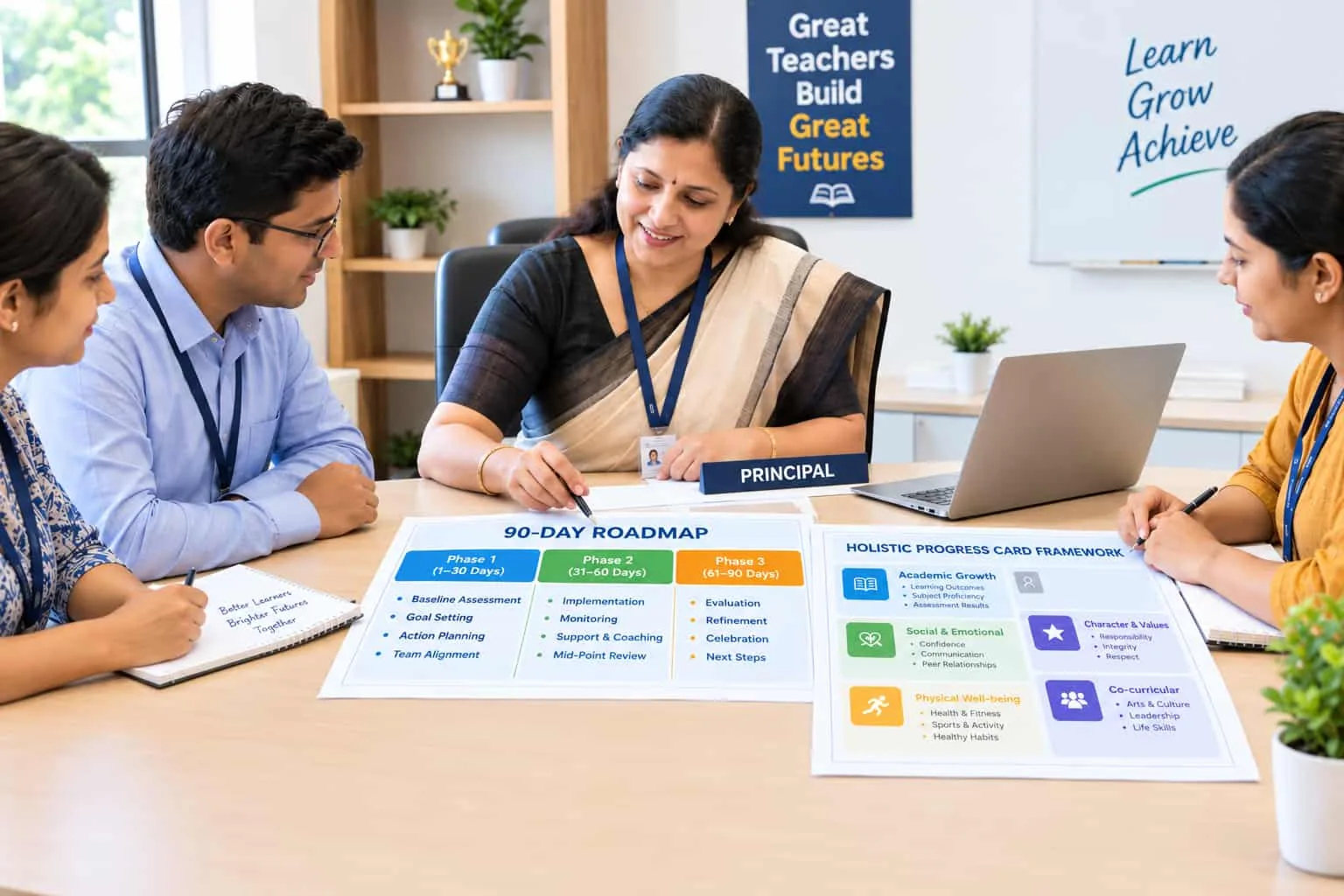
A phased plan addresses these concerns through three stages.
Period | Main priority | Expected output |
Days 1–30 | Preparation | Approved framework, assigned roles, staff orientation, and baseline review |
Days 31–60 | Pilot | Sample records, teacher feedback, and workflow adjustments |
Days 61–90 | Wider rollout | Agreed school process, parent communication, and review schedule |
These milestones are proposed management targets, not official government deadlines. Principals should adjust them to match board requirements, school resources, staff availability, and the academic calendar.
Days 1–30: Prepare the School
The first 30 days should establish the purpose, responsibilities, assessment framework, and resources required for HPC implementation. Principals should complete the preparation phase before asking teachers to record student progress through the new process.
Week 1: Review Current Assessments
Begin with an audit of the school's existing report cards, assessment schedules, teacher records, parent meetings, and student feedback methods.
Ask department heads and class teachers to identify what already works, what information is missing, and where recordkeeping takes too much time. This review will help the school retain useful practices instead of replacing every existing process.
The principal should confirm which PARAKH or board guidance applies to each class. Any local adaptation should preserve the intended competencies and meet applicable board or state requirements.
Week 2: Form an HPC Team
Appoint a small implementation team with clear responsibilities.
Role | Responsibility |
Principal | Approves the plan, reviews progress, and resolves resource issues |
HPC coordinator | Maintains the schedule and coordinates staff |
Department heads | Review competency mapping and assessment methods |
Class teachers | Collect evidence and prepare student records |
IT or administrative staff | Support access, records, and technical issues |
Parent representatives | Share feedback on communication and report clarity |
The principal should appoint one person to maintain the action tracker. Every task needs an owner, a due date, and a clear definition of completion.
Week 3: Train Teachers
Teacher orientation should explain the purpose of HPC, the competencies relevant to each stage, the types of evidence teachers can use, and the process for recording observations.
Use practical examples rather than relying entirely on presentations. For example, ask teachers to review a sample student activity and write an observation that describes what the learner demonstrated, what evidence supports the observation, and what support may help next.
TalentGro Global provides HPC implementation training through NCERT-PARAKH Master Certified Trainers. Schools can consider this training during the preparation phase to help teachers understand assessment requirements, practice recording observations, and prepare for the pilot.
Expert Tip: Ask every teacher to complete one sample record during training. Review the entries together so staff can agree on clear language, suitable evidence, and age-appropriate expectations before the pilot begins.
Week 4: Set Standards and Choose Tools
Agree on how teachers will collect evidence, record observations, review entries, and prepare reports. The school should also decide how often teachers will update records and who will check them for accuracy.
Choose a manageable set of activities for the pilot, such as classroom tasks, projects, oral presentations, group work, portfolios, and student self-assessment. Avoid asking teachers to record every possible competency after every lesson.
At the end of Day 30, the principal should have an approved assessment framework, an assigned team, trained pilot teachers, a draft timetable, and a decision on whether to use paper records, existing school software, or a dedicated platform.
Days 31–60: Run a Small Pilot
The next 30 days should test the assessment process with selected classes before the school adopts it more widely. The pilot should reveal whether teachers understand the framework, whether records are practical to maintain, and whether the resulting feedback helps students.
Week 5: Select Pilot Classes
Choose a small group of classes that reflects the school's needs and available resources. A school may start with one section at a particular stage, provided that the pilot meets its board requirements and staffing capacity.
Set a baseline before the pilot starts. Record the time teachers currently spend preparing reports, the methods used to assess students, and the common problems reported by staff.
This baseline gives the school a point of comparison when it reviews the pilot.
Week 6: Collect Student Evidence
Teachers should use normal classroom activities to collect evidence of student learning. A group project, reading task, science activity, presentation, or reflective exercise can provide useful observations when linked to the relevant competencies.
Each entry should explain what the student did, what the teacher observed, and what the evidence suggests about progress. Avoid vague descriptions such as "good student" or unsupported labels that tell families little about actual learning.
Student self-assessment and peer feedback may also be included where suitable for the age group and the applicable framework.
Week 7: Review Records Together
The HPC coordinator should review sample records with teachers and department heads. Check whether entries describe observable behaviour, use consistent language, and reflect the relevant competency.
Look for differences in interpretation between teachers. If two teachers assess similar work very differently, discuss the evidence and clarify the shared criteria before the next reporting cycle.
The review should help teachers improve their assessment practice, not turn the pilot into a competition between staff members.
Week 8: Gather Feedback
Collect feedback from pilot teachers, students, and a small group of parents. Ask whether the records are easy to complete, whether the descriptions make sense, and whether the process adds unnecessary work.
The school should track practical measures such as:
- Percentage of pilot teachers who completed orientation.
- Percentage of planned student records completed on time.
- Average time spent on recordkeeping.
- Number of entries returned for correction.
- Teacher feedback on the clarity of competency descriptions.
- Parent understanding of the sample report.
These are suggested local measures rather than national performance benchmarks. The school should set realistic targets based on its own starting point.
Expert Tip: Do not expand the pilot simply because the forms have been completed. First check whether the entries are useful, consistent, and supported by evidence from classroom activities.
Days 61–90: Expand and Standardise
The final 30 days should turn the pilot's lessons into a school-wide process that staff can maintain. Principals should address the main problems identified during the pilot, approve the final workflow, and communicate expectations to all relevant stakeholders.
Week 9: Improve the Process
Use the pilot findings to simplify unnecessary steps, clarify confusing fields, and revise the reporting schedule where needed. If teachers spend too much time entering repeated information, review the workflow before asking more classes to adopt it.
Document the final process in a short staff guide. It should explain which competencies apply, what evidence teachers should collect, how records are reviewed, and how feedback reaches students and parents.
Week 10: Train the Remaining Staff
Provide orientation for teachers who did not take part in the pilot. Use examples from the pilot, with personal student information removed, to show how the process works in practice.
Schools that need external guidance can consider TalentGro Global's HPC implementation training, delivered through NCERT-PARAKH Master Certified Trainers. School leaders should confirm the training scope, session format, staff coverage, and expected learning outcomes when planning the programme.
Give teachers time to ask questions and complete a sample entry. Department heads should confirm that staff understand their responsibilities before school-wide use begins.
Week 11: Introduce the Reporting Process
Set dates for record updates, review meetings, report preparation, and parent communication. Make sure these dates fit examination schedules, holidays, and existing school responsibilities.
Explain to parents that the HPC complements academic results by showing a broader range of learning and development. Use plain language and provide a sample report so families understand how to read the information.
Parents should know whom to contact if a report is unclear or if they want to discuss a student's progress.
Week 12 and Days 85–90: Review Readiness
Complete a readiness review before the end of the 90-day period. Check teacher participation, record quality, access to the chosen tools, parent communication, and the arrangements for ongoing review.
The principal should approve wider use only when the school has a workable process and staff know how to carry out their responsibilities. Any remaining gaps should have a named owner and a due date.
At Day 90, the school should have a documented HPC process, trained staff, a tested reporting workflow, and a schedule for continued review. Full school-wide adoption may require more time where staffing, infrastructure, or board requirements create additional work.
Which HPC Software Should Schools Choose?
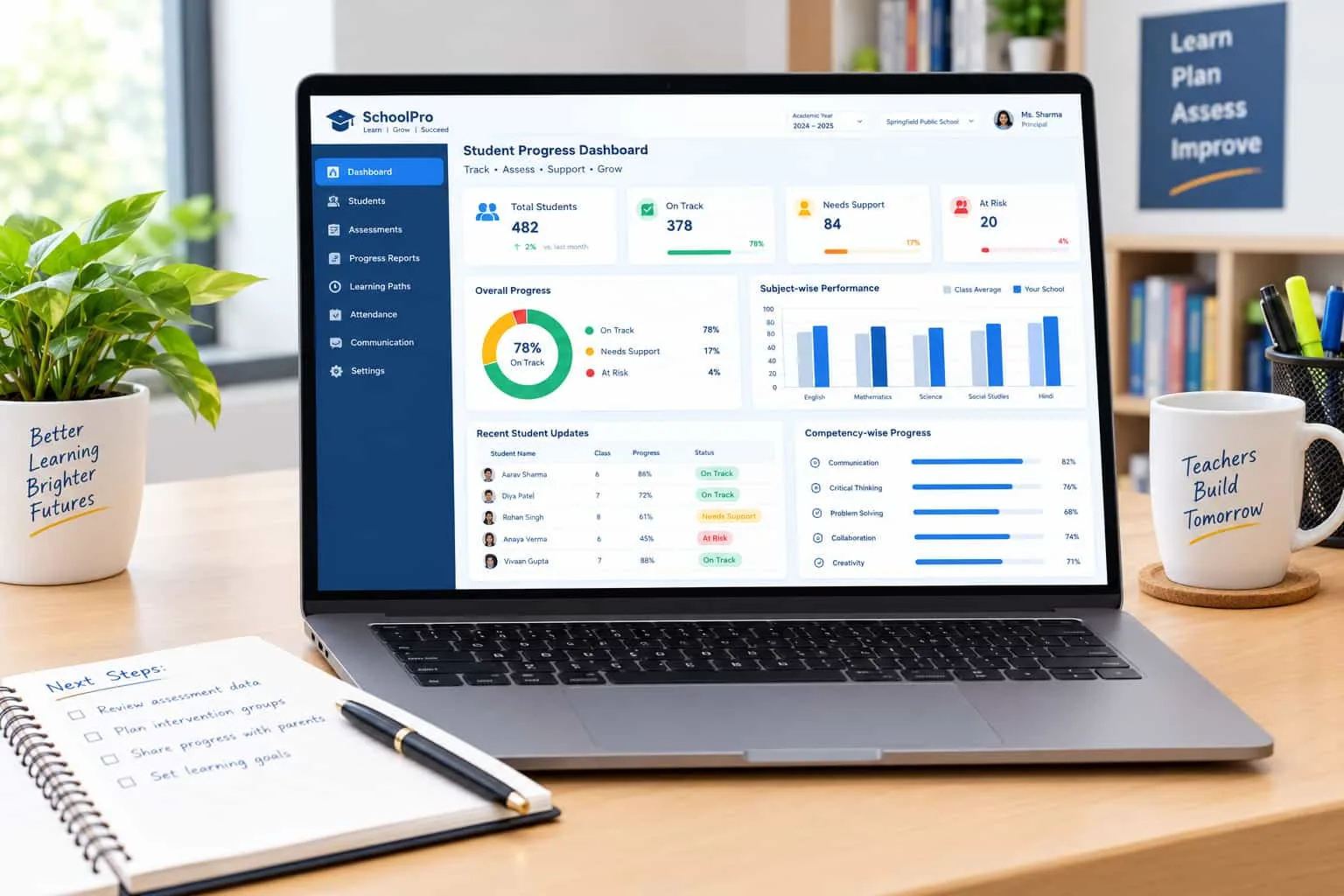
HPC implementation software should make assessment records easier to maintain while helping teachers produce accurate, useful reports. Software selection should follow the school's assessment requirements, not come before them.
A digital platform may reduce repeated data entry and help staff organise student records. However, it cannot replace clear competency definitions, teacher preparation, or sound assessment practices.
Principals should compare available tools against the following requirements.
Feature | What to check |
Competency mapping | Can the school align records with the relevant stage and framework? |
Teacher entry forms | Can staff record observations and evidence without unnecessary steps? |
Student records | Can authorised staff find the correct learner information? |
Report generation | Can the platform produce clear reports for review before sharing? |
Access controls | Can access be limited according to each person's role? |
Data protection | Are storage, backups, retention, and deletion practices documented? |
Parent communication | Can reports be shared securely with the intended recipients? |
Support | Is training and technical help available when staff need it? |
Cost | Are setup fees, recurring charges, support costs, and renewal terms clear? |
Before buying a platform, ask for a demonstration using a sample workflow. Test how long it takes a teacher to enter observations, correct an error, review a report, and share it through the approved process.
Schools can also visit the TalentGro Global website to review information about its services and HPC implementation training. Evaluate software providers separately against the school's requirements, and verify their current features, privacy terms, pricing, and support arrangements before making a purchase.
HPC Implementation Checklist
An HPC implementation checklist helps school leaders confirm that the required tasks have been completed before wider use begins. The following list can be used during the 90-day rollout and adapted to local board requirements.
Preparation
• Confirm the relevant HPC framework for each school stage.
• Confirm the relevant HPC framework for each school stage.
• Review existing report cards and assessment practices.
• Appoint an HPC coordinator and implementation team.
• Set the 90-day schedule and assign task owners.
• Prepare teacher orientation material.
• Approve assessment methods and recordkeeping rules.
• Decide whether paper records or digital tools will be used.
• Decide whether paper records or digital tools will be used.
• Assess whether external HPC training is needed.
Pilot
• Select suitable pilot classes.
• Record baseline information.
• Train pilot teachers.
• Collect evidence through planned classroom activities.
• Review sample records for clarity and consistency.
• Gather feedback from staff, students, and parents.
• Record issues and assign corrective actions.
Wider Use
• Revise the workflow using pilot feedback.
• Train remaining teachers.
• Approve the final reporting process.
• Set record review and reporting dates.
• Explain the new report format to parents.
• Confirm access controls and data protection measures.
• Schedule the next internal review.
The principal should keep a record of completed tasks, unresolved issues, and the person responsible for each action. This makes it easier to spot delays and address problems before the next reporting period.
Common HPC Implementation Mistakes
Schools can reduce avoidable delays by addressing common problems before the rollout expands. The following issues deserve attention during planning and review.
Treating HPC as a form-filling exercise: Teachers may complete every field without collecting meaningful evidence. Link each record to an actual activity or observation.
Training staff only once: A single orientation session may not resolve differences in interpretation. Use sample entries, review meetings, and follow-up support.
Choosing software too early: A platform selected before requirements are defined may create extra work. Agree on the assessment workflow first, then test suitable tools.
Using identical expectations for every age group: Competencies and assessment methods should match the relevant stage. Refer to the applicable PARAKH or board framework when setting expectations.
Sharing unclear reports with parents: Families need descriptions they can understand and use. Explain what the observations mean and what support may help the student next.
Ignoring privacy: Student records contain personal information. Restrict access, use approved sharing methods, and follow applicable school and data protection requirements.
Failing to review results: The school should assess whether the process works for teachers and students after the first reporting cycle. Use the findings to improve the next cycle.
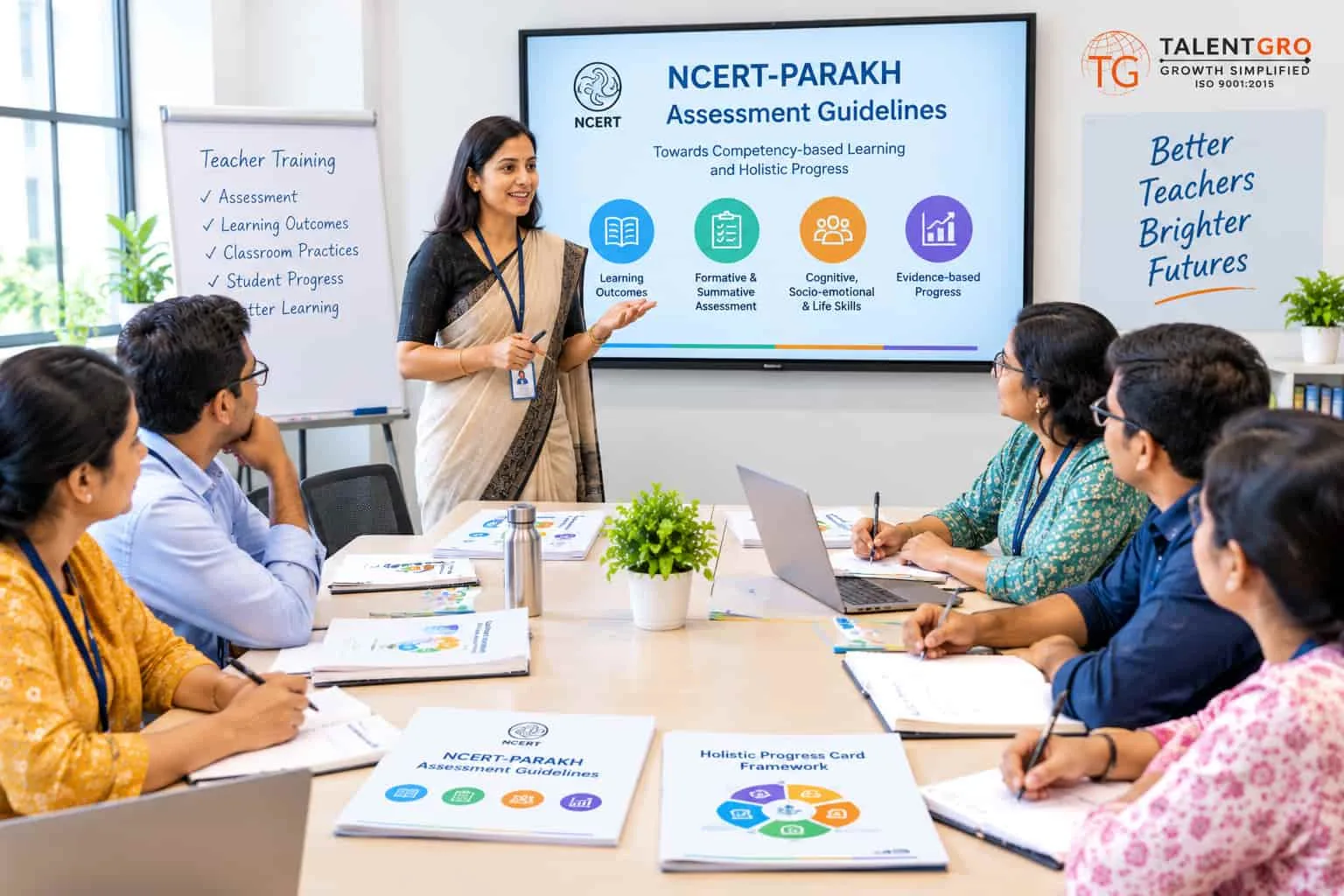
How Can TalentGro Global Support HPC Training?
TalentGro Global provides HPC implementation training through NCERT-PARAKH Master Certified Trainers for schools preparing to introduce the Holistic Progress Card process. This service gives principals an external training option when preparing teachers to understand assessment requirements and apply them in classroom practice.
Teacher preparation is a key part of a successful rollout because staff must understand how to connect classroom activities with competencies, record observations, and communicate progress to parents. A planned training programme can also give teachers time to work through sample records and discuss questions before the school begins its pilot.
When assessing an external training programme, school leaders should ask about:
- Training coverage: Which teachers, grades, and school stages are included?
- Practical exercises: Will teachers practise preparing sample HPC records?
- Framework alignment: How does the training address the relevant NCERT-PARAKH guidance and applicable board requirements?
- Delivery format: Are sessions conducted online, in person, or through a combination of formats?
- Follow-up support: What assistance is available after the initial sessions?
- Expected outcomes: What should teachers be able to complete or demonstrate by the end of training?
Schools should confirm the programme details, trainer credentials, fees, schedule, and deliverables with TalentGro Global before making arrangements. This helps principals select training that matches their school's requirements, staff availability, and 90-day implementation schedule.
Start Your School's HPC Rollout
Successful HPC implementation starts with a clear purpose, suitable assessment methods, and staff who understand their responsibilities. A 90-day plan gives principals a practical way to prepare, run a pilot, improve the process, and establish a schedule for continued review.
Begin by reviewing the relevant PARAKH framework and auditing the school's existing assessment process. Then appoint a coordinator, set the first month's tasks, and choose a pilot group before committing to wider adoption.
Teacher training deserves particular attention because the quality of HPC records depends on how well staff understand the framework and apply it in the classroom. TalentGro Global provides HPC implementation training through NCERT-PARAKH Master Certified Trainers, giving principals an external training option when preparing their teams.
Before selecting a training provider, confirm the training scope, trainer credentials, session format, costs, and expected outcomes. With suitable preparation, a clear timetable, and regular reviews, schools can establish an HPC process that helps teachers communicate student progress and gives families useful information about the next steps in learning.

Content writing intern at TalentGro Global.
Frequently Asked Questions
Want to know more?
Reach out to our team any time