
Key Takeaways
- Competency mapping links skills, knowledge and behaviours to a specific role or career goal.
- Students and professionals use it to expose skill gaps and plan targeted learning instead of random courses.
- The process is four steps: define the role, list required competencies, assess your level, then close the gaps.
Choosing a career is no longer simply about selecting a degree or finding a job title. As technology changes the workplace, students and professionals increasingly need to understand which competencies they already have, which ones they need to develop, and which careers match their strengths.
The World Economic Forum's Future of Jobs Report 2025 estimates that 39% of workers' existing skill sets will be transformed or become outdated between 2025 and 2030. The same report identifies the skills gap as a major barrier to business transformation, with 63% of employers surveyed citing it as a key obstacle.
This is where competency mapping becomes useful. By comparing the competencies required for a role with the competencies a person currently possesses, competency mapping can reveal strengths, development areas, and potential career directions.
What Is Competency Mapping?
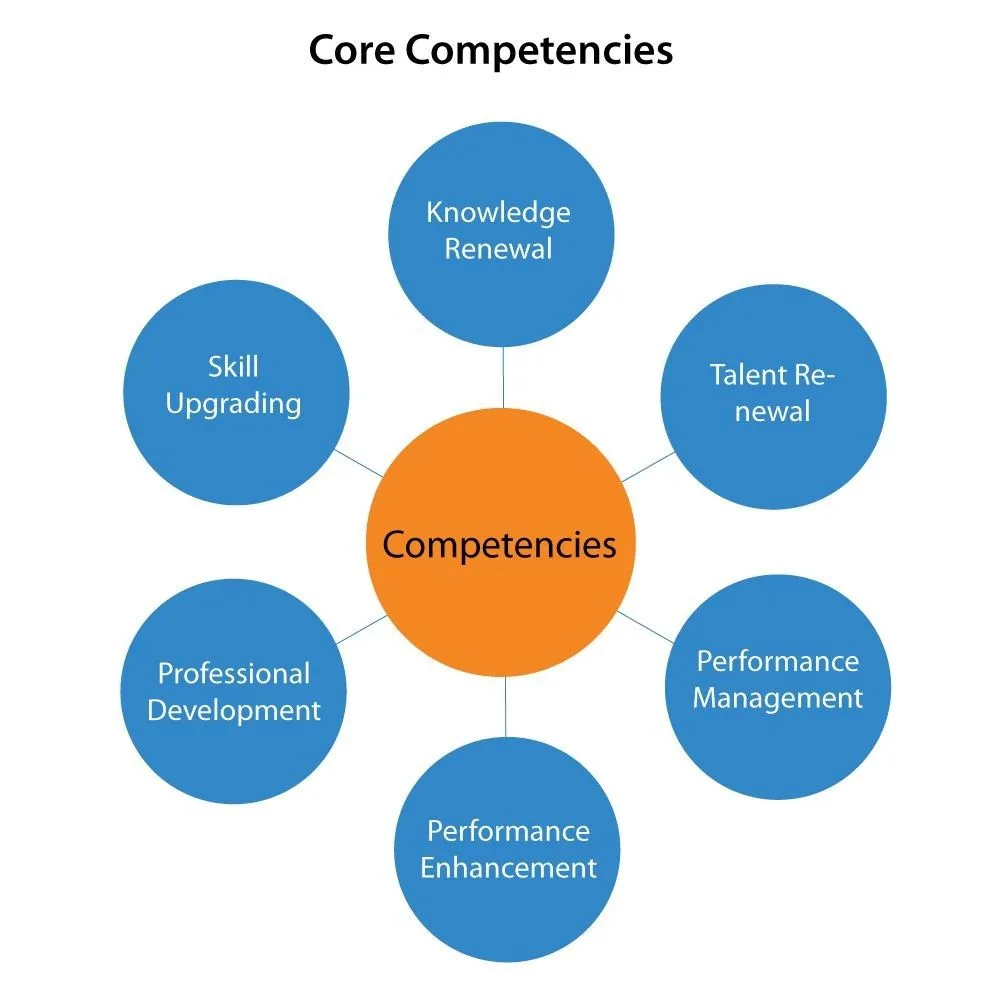
Competency mapping is the process of identifying, assessing, and comparing the knowledge, skills, abilities, behaviors, and other attributes required for a role with the competencies a person currently possesses.
In simple terms, competency mapping answers three important questions:
1. What can I do well?
2. What competencies does my desired career require?
3. What gaps do I need to close to reach that career?
For organisations, competency mapping can help define the capabilities required for different positions and identify gaps within their workforce. For individuals, it can provide a structured way to understand their strengths and development needs.
A competency is broader than an individual skill. It can combine knowledge, skills, behaviours, attitudes, and other characteristics that contribute to successful performance.
💡 Expert Tip: Do not create a competency map based only on technical abilities. Include communication, problem-solving, adaptability, teamwork, leadership, and other behavioural competencies when they are relevant to the target role.
Why Is Competency Mapping Important for Students and Professionals?
Competency mapping is important because it connects a person's current capabilities with the competencies required for a specific career or role.
A student may know that they want to become a software developer, financial analyst, designer, teacher, or marketing professional, but a job title alone does not explain everything required to succeed.
For example, a student interested in data analytics may need competencies in:
• Data interpretation
• Statistics
• Spreadsheet tools
• SQL or programming
• Analytical thinking
• Problem-solving
• Communication
• Business understanding
Mapping these competencies makes career planning more specific. Instead of simply saying, "I want to become a data analyst," the student can identify the capabilities required and assess their current level.
The need for this approach is becoming stronger as employers increasingly evaluate skills directly. According to the World Economic Forum, 48% of employers expect to use skills assessments during hiring between 2025 and 2030, while 81% expect to continue relying on work experience.
This means having a degree may be only one part of demonstrating career readiness.
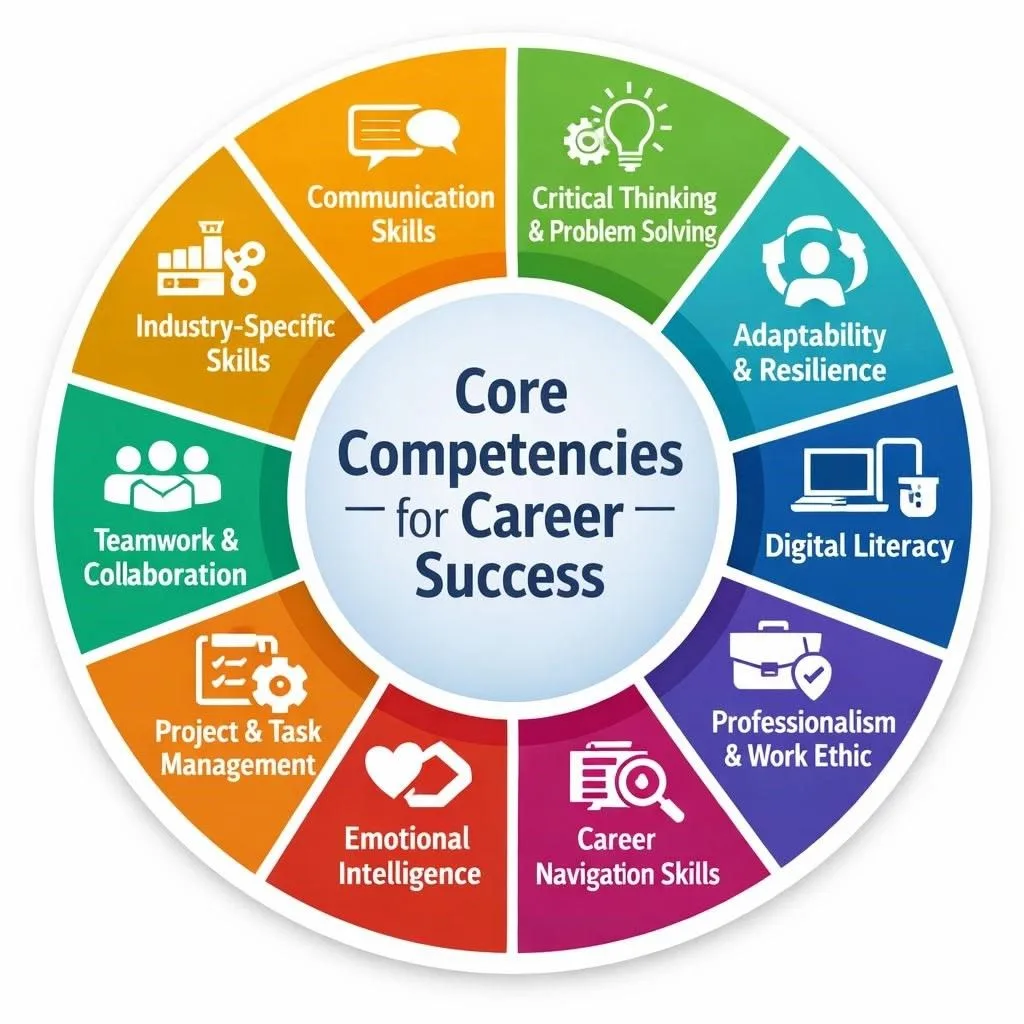
What Are the Main Types of Competencies?
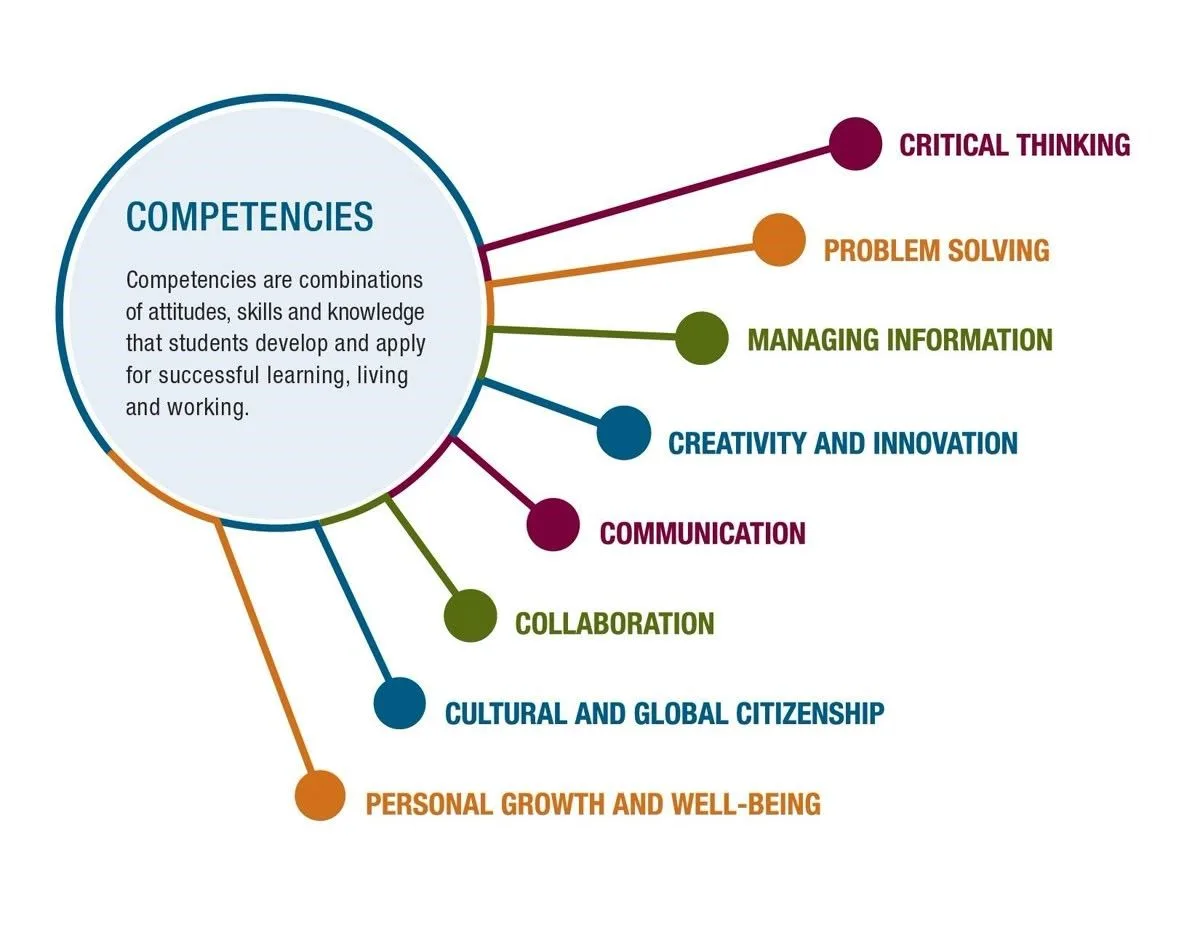
The main competency categories include technical, functional, behavioural, cognitive, and leadership competencies, depending on the role being assessed.
1. Technical Competencies
Technical competencies are the specialised abilities required to perform particular tasks.
Examples include:
• Programming
• Accounting
• Data analysis
• Graphic design
• Machine operation
• Financial modelling
• Digital marketing
A software developer, for example, may need competencies in programming languages, databases, software development practices, and testing.
2. Functional Competencies
Functional competencies are capabilities associated with a particular area of work.
For example, a marketing professional may require competencies in:
• Market research
• Campaign planning
• Content strategy
• Customer analysis
• Performance measurement
3. Behavioural Competencies
Behavioural competencies describe how a person approaches work and interacts with others.
Examples include:
• Communication
• Teamwork
• Adaptability
• Accountability
• Emotional intelligence
• Conflict management
These competencies can be important across many different careers.
4. Cognitive Competencies
Cognitive competencies relate to how a person processes information and solves problems.
They can include:
• Analytical thinking
• Critical thinking
• Creativity
• Decision-making
• Problem-solving
The World Economic Forum's 2025 research identifies analytical thinking as the top core skill, with around seven in ten companies considering it essential.
5. Leadership Competencies
Leadership competencies become particularly important for managerial and senior positions.
They can include:
• Strategic thinking
• People management
• Delegation
• Decision-making
• Coaching
• Influence
A strong competency map therefore looks beyond technical qualifications and considers the wider capability profile required for success.
How Does Competency Mapping Work?
Competency mapping generally involves defining the target role, identifying required competencies, assessing current capabilities, identifying gaps, and creating a development plan.
A practical competency mapping process can follow these steps:
Step 1: Define the Career or Role
Start with a specific target.
Instead of choosing a broad objective such as "business career," identify a particular role such as:
• Business analyst
• Financial analyst
• HR executive
• Software developer
• Digital marketing specialist
• UX designer
A specific target makes the competency assessment more useful.
Step 2: Identify Required Competencies
Research the target role and identify the competencies employers commonly expect.
Use reliable sources such as job descriptions, professional bodies, industry reports, and recognised career frameworks.
Separate the requirements into categories such as technical, functional, behavioural, and cognitive competencies.
Step 3: Assess Your Current Competencies
Rate your current capability against each requirement.
A simple scale could be:
Competency Level Meaning
1 – Beginner Limited knowledge or exposure
2 – Developing Can perform basic tasks with support
3 – Competent Can perform tasks independently
4 – Advanced Can handle complex situations
5 – Expert Can guide or teach others
The purpose is not to give yourself an impressive score. The purpose is to identify an accurate starting point.
Step 4: Identify Competency Gaps
Compare the current level with the level required for the target role.
For example:
Competency Current Level Required Level Gap
Excel 3 4 1
Data Analysis 2 4 2
Communication 4 4 0
SQL 1 3 2
Problem-Solving 3 4 1
This makes development needs visible.
Step 5: Create a Development Plan
Turn the gaps into specific actions.
If SQL is a major gap, the development plan might include completing a structured course, practising SQL problems, and building a small portfolio project.
If communication is the gap, the plan might include presentations, group discussions, writing exercises, or public-speaking practice.
Step 6: Reassess Regularly
Competency mapping should not be treated as a one-time exercise.
Technology, industries, and job requirements change. The World Economic Forum expects AI and big data, networks and cybersecurity, technological literacy, creative thinking, and adaptability-related skills to increase in importance through 2030.
Regular reassessment helps ensure that a competency map remains relevant.
What Are the Benefits of Competency Mapping?
Competency mapping helps individuals understand their strengths and skill gaps while helping organisations align talent development with role requirements.
Better Career Decisions
Students can compare their existing capabilities with the requirements of different careers before committing significant time and money to a particular path.
Clearer Skill Development
Instead of learning random skills, individuals can prioritise competencies that are relevant to their target role.
Identification of Skill Gaps
A competency map makes missing capabilities easier to see.
For example, a student may have excellent technical knowledge but weak communication skills. Another student may have strong interpersonal abilities but need more technical training.
More Focused Training
Organisations can use competency information to identify where employees need upskilling or reskilling rather than providing identical training to everyone.
Better Career Progression
Professionals can use competency maps to understand what they need to demonstrate before moving into more advanced roles.
Improved Hiring and Assessment
Competency mapping can also support employers in defining what they actually need from candidates rather than relying exclusively on degrees or job titles.
How Is Competency Mapping Different From Skills Mapping?
Competency mapping is broader than skills mapping because competencies can include knowledge, skills, behaviours, attitudes, and other characteristics required for effective performance.
Skills mapping primarily focuses on the skills people possess and where those skills may be needed.
For example, "Python programming" can be considered a skill. A broader competency for a data professional might combine programming knowledge with analytical thinking, problem-solving, communication, and the ability to apply data to business problems.
The two approaches can therefore complement each other.
A skills map can tell you what someone can do, while a competency map can provide a broader picture of how effectively they can apply relevant capabilities in a particular role.
How Can Students Use Competency Mapping for Career Planning?
Students can use competency mapping to compare potential careers, identify their strengths, discover skill gaps, and create a practical development roadmap.
Consider a student deciding between marketing and data analytics.
For marketing, the student might assess:
• Communication
• Creativity
• Consumer psychology
• Content creation
• Market research
• Digital marketing
• Data interpretation
For data analytics, the student might assess:
• Mathematics
• Statistics
• Excel
• SQL
• Data visualisation
• Analytical thinking
• Problem-solving
• Communication
The comparison can reveal where the student's current capabilities align most strongly and what additional development would be required for each pathway.
At TalentGro Global, career planning can be approached through a broader understanding of a student's interests, strengths, personality, and career requirements, rather than choosing a career based only on marks or social expectations.
💡 Expert Tip: Use competency mapping to explore multiple career options before making a final decision. The objective is not to prove that you are already qualified for a career; it is to identify the pathway from your current capabilities to the capabilities the career requires.
What Is a Competency Mapping Framework?
A competency mapping framework is a structured system that defines the competencies required for specific roles and provides a consistent way to assess those competencies.
A basic framework can contain four components:
Role → Required Competencies → Current Competencies → Development Actions
For example:
→ SEO, content strategy, analytics, communication, creativity
→ Current proficiency assessment
→ Identify gaps
→ Training, projects, internships, and practical experience
More sophisticated frameworks may assign proficiency levels, behavioural indicators, assessment methods, and development activities to each competency.
This makes the framework useful for recruitment, employee development, performance management, succession planning, and career progression.
What Role Does Competency Mapping Play in the Future of Work?
Competency mapping helps people and organisations respond to changing skill requirements by making capability gaps more visible and development more targeted.
The workplace is changing rapidly because of AI, automation, technological development, demographic shifts, and the transition toward greener industries.
The World Economic Forum's Future of Jobs Report 2025 projects 170 million jobs to be created and 92 million jobs to be displaced globally by 2030, resulting in a net increase of 78 million jobs.
The important point is that new jobs will not necessarily require the same competencies as today's jobs.
AI and big data, cybersecurity, technological literacy, creative thinking, resilience, flexibility, agility, curiosity, and lifelong learning are among the skills expected to rise in importance.
Competency mapping can help individuals respond to these changes by asking a practical question:
"What do I need to become capable of doing next?"
That question is often more useful than simply asking which degree or job title is popular today.
Start Building Your Competency Map Today
Competency mapping turns career planning from a vague exercise into a structured process.
Start with one target career, identify the competencies it requires, honestly assess your current level, identify the biggest gaps, and create a development plan around those gaps. Revisit the map regularly as your experience grows and the labour market changes.
For students, this approach can make career exploration more practical. For professionals, it can provide a framework for upskilling, reskilling, and career progression.
The goal is not to match yourself perfectly to a job on the first attempt. The goal is to understand where you are today, where you want to go, and which competencies can help you get there.

Content writing intern at TalentGro Global.
Frequently Asked Questions
Want to know more?
Reach out to our team any time