
Freshers Job Preparation: What to Do and Avoid
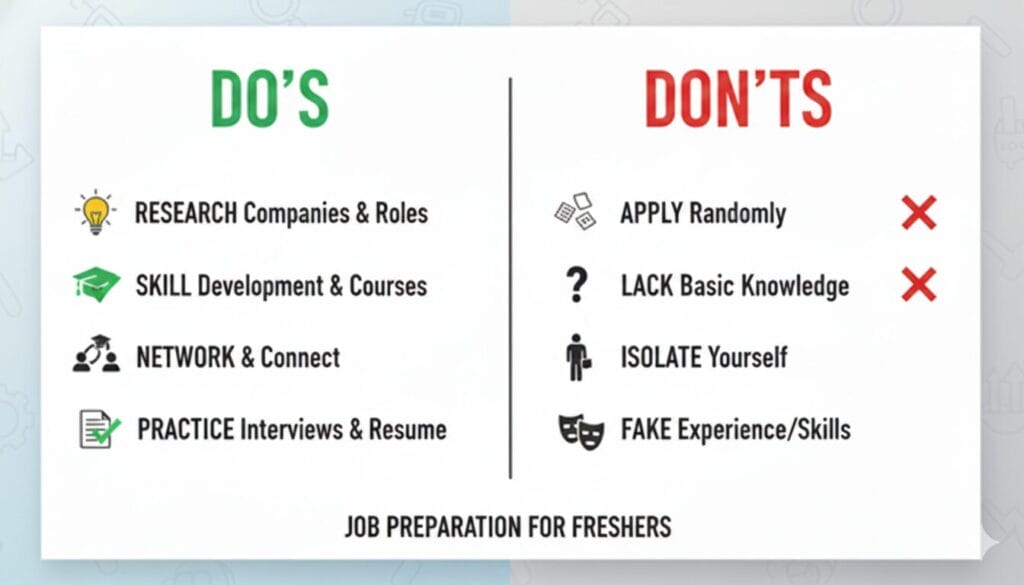
Job preparation is an important phase for freshers entering the professional world for the first time. With more opportunities available and higher expectations from employers, having the right approach, mindset, and skills can make a real difference.
Understanding the right do’s and don’ts helps freshers prepare in a smarter way and avoid common mistakes during their job search.
Do’s of Job Preparation for Freshers

1. Do Set Clear Career Goals
One of the first steps in job preparation is understanding your career direction. Freshers should identify the field they are interested in and learn about the roles they are applying for.
Having clarity helps in focused preparation and improves performance during interviews.
2. Do Create a Strong and Well-Structured Resume
A resume plays a key role in job selection.
A good resume should:
- Highlight academic achievements
- Include internships, projects, and certifications
- Mention relevant skills clearly
- Be simple, clean, and error-free
Customising your resume based on the job role improves its effectiveness.
3. Do Focus on Skill Development
Freshers should work on both technical and soft skills.
Apart from technical knowledge, employers value:
- Communication skills
- Teamwork
- Problem-solving ability
- Adaptability
Online courses, workshops, and regular practice help improve employability.
4. Do Prepare Well for Interviews
Interview preparation is equally important.
Freshers should:
- Practise common interview questions
- Learn to explain projects clearly
- Improve body language and confidence
Proper preparation helps reduce nervousness and improves clarity during interviews.
5. Do Use Networking as Support
Networking can support job preparation when used correctly.
Freshers can:
- Connect with alumni and seniors
- Use LinkedIn professionally
- Attend job fairs and career events
Networking often helps in learning about opportunities and industry expectations.
Don’ts of Job Preparation for Freshers

1. Don’t Apply Without Research
Applying to jobs without understanding the role is a common mistake.
Before applying, freshers should:
- Read job descriptions carefully
- Understand required skills
- Check role suitability
Targeted applications are more effective than random ones.
2. Don’t Provide False or Exaggerated Information
Honesty is important in resumes and interviews.
Providing incorrect information can lead to rejection, as interviewers can easily identify inconsistencies.
3. Don’t Ignore Soft Skills
Some freshers focus only on technical skills and overlook soft skills.
Communication, attitude, and adaptability play an important role in workplace success and career growth.
4. Don’t Delay Preparation
Avoid leaving preparation for the last moment.
Regular learning and steady practice give better results than rushed preparation before interviews.
5. Don’t Get Discouraged by Rejections
Rejections are part of the job search process.
Instead of losing confidence, freshers should:
- Learn from feedback
- Improve weak areas
- Continue applying with patience
Each experience helps in long-term improvement.
Quick Job Preparation Checklist for Freshers
Use this table as a quick recall before applying or attending interviews.
| Area | Do | Don’t |
| Career Planning | Be clear about the role and field | Apply without direction |
| Resume | Keep it simple and honest | Add false or exaggerated details |
| Skills | Work on technical and soft skills | Ignore communication and attitude |
| Interview Prep | Practise answers and project explanations | Go unprepared or overconfident |
| Applications | Apply after reading job descriptions | Apply randomly everywhere |
| Learning | Prepare regularly and consistently | Leave everything for the last moment |
| Mindset | Stay patient and positive | Get discouraged by rejections |
Building Job-Ready Skills With the Right Guidance

Job preparation becomes easier when freshers understand what employers actually expect. Along with self-study and practice, having the right guidance helps avoid confusion and saves time.
TalentGro Global supports freshers by focusing on practical skills, career clarity, and industry expectations. Through structured learning and real-world exposure, freshers can prepare with confidence and build a strong foundation for their professional journey.
With the right approach and consistent effort, freshers can move from preparation to placement with better clarity and readiness.
Frequently Asked Questions (FAQ)
1. Why is job preparation important for freshers?
Job preparation helps freshers build confidence, improve skills, and understand what employers expect. It increases the chances of getting shortlisted and performing well in interviews.
2. What should a fresher focus on first while preparing for a job?
Freshers should first identify their career goals and understand the job roles they want to apply for. Clear direction makes preparation more focused and effective.
3. Is having a good resume important for freshers?
Yes. A well-structured and honest resume creates the first impression on employers and helps them quickly understand your skills and background.
4. Should freshers apply to multiple jobs at the same time?
Yes, freshers can apply to multiple jobs, but only to relevant roles. Reading job descriptions carefully before applying improves the chances of selection.
5. What skills are most important for freshers?
Both technical skills and soft skills are important. Employers look for communication ability, teamwork, problem-solving skills, and willingness to learn along with technical knowledge.
6. How important are soft skills in job preparation?
Soft skills are very important because employers value attitude, adaptability, and communication. These skills help freshers adjust better in the workplace.
7. Is it okay to exaggerate skills or experience on a resume?
No. Exaggerating or providing false information can lead to rejection during interviews and can harm credibility. Honesty builds trust with employers.
8. Is it normal to face rejection during job preparation?
Yes. Rejections are common, especially for freshers. Each rejection helps identify areas for improvement and prepares candidates better for future opportunities.